Wednesday, June 24, 2026

Even if the shots fired are only verbal, "Three O'clock Briefing" offers a compelling, contemporary war story

A century or so ago, war stories were usually simple. Villains were obvious, stakes were life and death, the end was either victory or defeat.

The geopolitics of the 21st century have scrambled any rote framing for a war story. Are the good guys really good, are the bad guys really bad, does anyone ever really win?

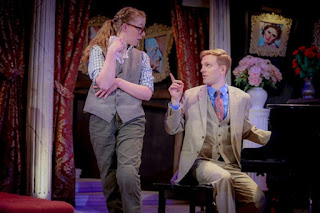
Amidst the increasing complications involved in setting any story in a combat zone, playwright Bo Wilson has come up with an elegant alternative. His articulate, compelling, and often very funny two-hander, "The Three O'clock Briefing," explores a slew of issues related to modern military exercises without ever directly involving guns, combat, or enemy engagement at all.

The clever conceit pits a brother and sister on opposite sides of a journalistic question: what is the truth and who has the right to know that truth? From that starting point, other hot-button topics emerge through the personal stories of the characters. Before its end, the play delivers a deeper understanding of PTSD, sexual assault, and "don't ask / don't tell."

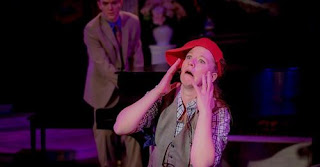
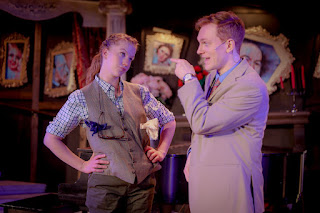
Lieutenant Colonel Cary Bookman is a public affairs officer for the Marines, stationed in an unnamed country in the Mideast. His little sister Bobbi, formerly a soldier in the Army who has found an award-winning career in journalism, is covering the American effort in this country.

Wilson establishes a playfully combative dynamic between these characters early on as each tries to maintain their loving relationship even as their jobs are forcing them into conflict. Bobbi has heard rumors that American forces are going to abandon their occupation, Cary is forced to take a "can neither confirm nor deny" posture to those rumors.

It's hard to know whether the depiction of military communications work is realistic but Wilson expertly captures sibling banter, often to amusing effect, as in this exchange as Bobbi continues to badger Cary for information:

CARY: I’m agreeing with you.

BOBBI: You’re not. You’re using agreement to shut me up.

CARY: Is that all it ever took?

BOBBI: No.

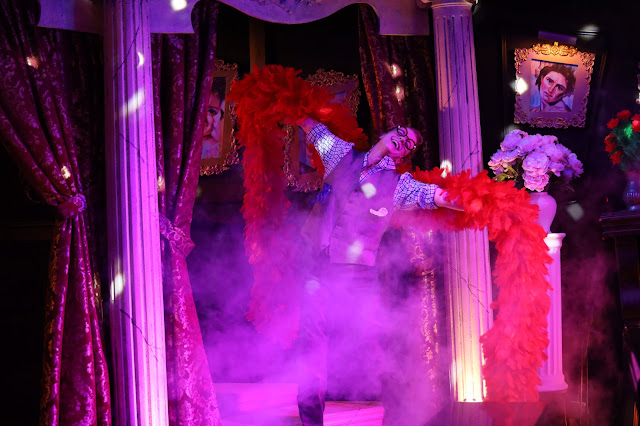
While the verbal sparring of the first act has an impressive joke density, given the subject matter, the second act shows Wilson's ability to capture inner turmoil in an character's onstage behavior. Both Cary and Bobbi end up having demons to wrestle with and a dramatic occurrence at the end of the first act has them facing them head-on.

In a truly surprising turn, the revelations that emerge ultimately lead to a recontextualization of the Bookman family history, as the roles of journalist and soldier get further complicated with the reality of them being brother and sister.

"Three O'Clock Briefing" delivers a number of set pieces where the impact of violence is explicated in vivid detail. Even so, some of its most heartfelt moments reflect how profound familial love endures amidst life's complications.

From a theatrical standpoint, the play provides two vibrant, captivating characters that actors will love digging into. A gripping play that doesn't require any awkward pantomimed shoot-outs, "Three O'clock Briefing" has all the appeal of an exceptional war story without any of the blood and guts.

(My preview of the staging of "Three O'clock Briefing" can be found at StyleWeekly.com)

Wednesday, November 30, 2022

Birthday Dozen: A Tribute to the Guy who Deals the Cards


Admiration comes in many flavors. 


You admire people who do things you don't do and could never do, your Usains Bolt or Simones Biles. You admire people who do the things you do but much better than you could imagine doing; for me, that's your Franks Rich or Kurts Vonnegut. 

Then there are people who do whatever they do with a specific style or elan that makes it iconic; the list here could veer all over the place but I'm thinking Frank Sinatra, David Bowie and Prince all make the grade.

I admire Cranky Pete on all of those levels, and more. He's a writer, he's a poker player, but mostly, he's an iconic example of the post-modern intellectual who doesn't need misogyny to prove his manhood. More importantly, he's a genuinely great dude.

Any time spent in Pete's presence is time well spent. Even when the cards he's given me have been shit, the dealer has been gold. Hanging with him and the boys online over the pandemic was a lightweight but steadfast anchor to the world of human connection for me, and I expect for most of those involved.

It takes a strong center of gravity to hold members of a community in each others' orbit instead of flinging off into different directions like random asteroids plummeting through the void of space. Pete provides that center. I admire him for it, for his persistent sardonic humor, and for his talents both artistic and literary. 

But not for his poker playing. If Aaron is at the top of the leaderboard, the universe is askew somehow and I think Pete's gotta accept the blame.

Happy Birthday, Pete. Hope you enjoy the songs.

Birthday Dozen 001


Bookends: 
"Pete the Cat Theme (feat. Elvis Costello)" -- Pete the Cat, Elvis Costello
"He's the Man" -- The Simpsons, Shawn Colvin


Elvis is best when he's brief and this is about as brief as you can get. At the other end of the playlist, another brief one but chock full of throwaway one-liners that would be more iconic if more people knew this song. Hard to believe this is the same Shawn Colvin of "Sunny Came Home." "Get down and put your knees together!"

The Magazines:
"PUNCH LINE! -- Dempagumi
"Brick" -- Ben Folds Five


Before I knew Pete, I knew "Pete," the guy at the helm of "PUNCHLiNE" who made me laugh out loud with snappy prose that was never dumb or cheap, and usually had nuggets of insight shining bright within the casual irreverence. This song may come off as an annoying anime theme song for most listeners but 30 seconds in, it takes its first of a few weird sonic detours. If you can last to the 3 minute mark, there are a couple more plus a short shredding guitar solo. 

I hope mentioning "Brick" doesn't open any old wounds. The paper was a valiant effort, even if it could  by definition never be another Punchline. The song is the closest to a pop song on this list and is a bit sad and wistful, perhaps all appropriate analogs to the mag. 

Punch the Clock:
"Dealer (feat. Future & Lil Baby)" -- RMR, Future, Lil Baby
"Artillery" -- Infected Mushroom


OK, so being a "dealer" is not actually a job but its the main role I've known Pete in for the past 8-10 years or so. The sounds that kick off the song are the least annoying sitar riffs I've ever heard. (Sales) Artillery was a job for Pete; that's about all I know about it. The song is a little paint-by-the-numbers rap-wise but the lyrics include pop culture refs in a way that suggests midlife angst that I can relate to.

Partners:
"Liz" -- Remi Wolf
"Diavolo" -- Liz


I chose both of these songs because I liked the way they sound and they namecheck Liz. Listening to the lyrics, I realize the messages may be problematic ("She don't seem the same since she working on the corner," Diavolo = Devil). So I'll just say I was trying to pay tribute to your awesome wife who I wish I had gotten to know better when we were both at Style. But she's undoubtedly cool and so are these songs.

The Teenager:
"Lola" -- Ripe
"Lola" -- MIKA


The Kinks cover seems an obvious choice and overused but this is one of the best covers I've heard. Purists probably cringe at the horns, particularly the brass freak-out at the end. Seems like a party to me. The MIKA song is a rare love song that manages to be unironic and simple without being dumb. I can't help but embrace a knowing line like "Love makes you laugh, love makes you cry / The oldest game in history, repeated."

The Boy:
"Woody" -- Hayden
"Woody Woody" -- Dimie Cat


I don't know who Hayden is but this song has a Mumford & Sons vibe without the pretension. It's also apparently about a cat, so it connects in a weird and unintentional way with the first song. So there's that. I also don't know Dimie Cat who put out two records about 10 years ago. Her songs seems like a fun mix of classic jazz and modern stylings that I think/hope an audiophile like Pete can appreciate.

Listen on Spotify. (Sorry no YouTube link!)

Thursday, September 08, 2022

Return on Investment: The enriching experience of “The Inheritance”

"Time is free, but it’s priceless." – Harvey Mackay

Quotes like Mackay’s might make you wonder, why in the world would you spend 7 hours watching a play?

I’ll tell you: because it’s the best investment you could possibly make right now.


Look, the stock market is a mess, right? Who knows where it's going. And what is money anyway? If the pandemic showed us anything, it's that time is the most valuable resource we've got.


“The Inheritance” is a play in two parts of 3 ½ hours each only playing at Richmond Triangle Players for a few more performances. My wife and I watched both parts on one day this past weekend, matinee, dinner break, then evening show. We were dazzled, enchanted, and moved.


Here’s a short list of the return we got on that day-long investment of our time:


  • The ability to say we saw the show that beat out “Slave Play” for the 2020 Tony. Some theater folks are still irate about that one.


  • A deeply considered and fully realized story arc for the couple, Toby Darling (Deejay Gray) and Eric Glass (Adam Turck), gay gents in their early 30s, living in NYC and contemplating getting married. You know those shows / plays / movies where you feel cheated because some key corner or aspect of the central relationship goes unexplored? This play delivers on every fascinating quirk of these compelling characters, from their rather explicit sex to their formative childhoods (Glass’s laid out right up front, Darling’s devastatingly detailed in the final act).


  • A gobsmacking, hilarious, heartbreaking, damn-I-didn’t-know-he-was-THAT-good performance from Gray. It would be easy (and wrong) to say Gray just plays himself. Sure, there is a sharp sassiness and boyish sexiness that could be construed as an exaggeration of Gray’s personality. But Toby is broken and desperate and mean and seductive in a thoroughly unique way that Gray embodies with astounding clarity. From the subtlest tossed off responses to one of the most flamboyant flame-outs you’ll see on stage, Gray commands attention and pays it back with a performance that will engross you while it’s unfolding then persist in your memory for days after.


  • A quieter, more sensitive, but no-less-impressive portrayal of resolute positivity by Adam Turck. If Gray is the tempestuous storm that speeds this sailboat forward, Turck is the rudder that keeps everything on course. His character has almost too many positive traits – caring, smart, supportive, engaged, devoted, AND a good cook – and yet Turck makes him thoroughly relatable... and forgivable when Eric makes a few questionable but plot-spurring choices. 


  • New talent! Lukas D’Errico, a junior at VCU, starts out a bit demure in his first of two roles, Adam, a wannabe actor and son of wealthy parents. But by the time he is alternating between that character and Leo, a homeless sex worker, it’s clear that an exciting new talent has emerged here in Richmond. Pay off: we can now say we saw him when.

  • New to Richmond talent! William Vaughn is a recent arrival from NYC and also has two key roles, playing the author E.M. Forster, the pseudo-narrator of much of Part 1, and Walter, an older gay man who acts as a bit of a mentor/teacher for Eric. Vaughn turns both characters – who could easily have come across as gimmicky or slight – into fully formed empathy-inducing humans. The dividend here will pay out the next time Vaughn is cast in town; whatever the show, it’ll be better with his presence in it.


  • A cavalcade of gay history, cultural conversation, issue wrangling, and vital remembrance of how the clash of politics and healthcare smashes victims in its midst, leaving even survivors with permanent scars. It’s hopeful to think this show takes steps toward crossing ‘doomed to repeat it’ off the debt sheet.


Just like this show goes on all day, I could go on all day about it. Lucian Restivo directs the hell out of it; the tech components are fabulous, particularly the bookshelf-centric set; and the rest of the extensive supporting cast shines.

I could say more but at this point I’m just wasting precious time you could be using buying your tickets. ROI? My oh my -- yes! Your life, mind, heart and soul will all be enriched.


Tickets at https://rtriangle.org/.


Monday, February 14, 2022

The show must go…urp

I often feel empathy for what an actor goes through on stage. This was the first time I can remember feeling horrible for what an actor was going through backstage.

The Saturday, Feb. 5th performance of “Murder for Two” at Swift Creek Mill started off pretty much as expected. As director Tom Width mentions in his curtain speech, the first few minutes are a bit odd: an extended bit of wordless stage business between the production’s two actors, Mark Schenfisch and Emily Berg-Poff Dandridge. Still, the actors moved through it briskly and settled quickly into the farcical murder plot that propels the show. Dandridge plays no fewer than 9 characters, all suspects in the killing of a famous author at his surprise birthday party, while Schenfisch plays Officer Marcus Moscowicz who takes it upon himself to solve the crime.

About 10 minutes into the main body of the show, Dandridge exited stage left in the middle of a scene. The show contains plenty of quick comings and goings so it didn’t seem odd. Schenfisch continued with some dialogue and, within a moment or two, Dandridge was back, flamboyantly portraying the dead author’s wife, complete with a southern drawl and a limp. Somewhere along the way, Schenfisch was joined by another character…but not another actor: his fellow officer, Lou, was represented by muted-trumpet “whah whah” sound effects similar to the adults in Charlie Brown cartoons.

Then, about 5 minutes later, Dandridge popped off stage again, only this time a bit more abruptly. Schenfisch stuttered a bit and started ad-libbing some tenuous lines. An amazingly quick-thinking tech person in the sound booth started responding to the ad-libs with impromptu “whah whahs” but the awkwardness was palpable.

Within a minute or two, Width was back on stage saying the show was going to have to pause. Someone behind me asked, “Is this part of the show?” Width explained: Dandridge wasn’t feeling well. As more murmurs started to rise, an audience-member asked “Is it COVID?” a question that Width was quick to rebut by outlining the testing protocols in place for the actors. It was probably something she ate or a stomach bug, he said, an answer that, given that the Mill is a dinner theater, had a couple patrons murmuring a bit more pointedly.

I know Emily a little: she was an amazing teacher for a dance program my son performed in for several years. I know her enough to be certain that she was doing everything she possibly could do to make it through the show and that her body was rebelling. Consummate professional that she is, I’m sure her sense of responsibility and “show must go on” attitude was compelling her to the stage even as her sick stomach was driving her back into the bathroom.

On stage, Schenfisch was demonstrating a charm completely consistent with his character in the show, settling behind the piano to pull a solid rendition of “Fur Elise” out of his memory banks. After he was done, Width was back out with a rope and a pair of scissors, asking for volunteers for a magic trick that thoroughly delighted the crowd.

Then Schenfisch was back, this time with a full-throated rendition of Sara Bareilles’s “Love Song,” which I appreciated as much for the reminder of this great song’s existence as I was for his committed delivery and solid piano accompaniment (again, pulled impromptu from memory).

And here’s where I swooned because theater people are amazing. The standard joke/complaint I’ve heard from thespians over the years involves a patron approaching them and asking “How do you remember all of those lines?” Not to downplay that very important skill but prodigious memorization only scratches the surface of most theater performers’ skills. 

Schenfisch was reinforcing a reality many casual fans may not be aware of: Most successful people in the theater are double-threats, if not triple, quadruple, or more. “Murder for Two,” with both actors singing and playing piano, was already an obvious showcase for this but, with his improvisation and quick-thinking, not to mention his musical direction of the show, Schenfisch bolded and underlined his multiple capabilities. 

As most people reading this know, Width is a director, actor, writer, set designer, and magician, just to name a few of his obvious talents, and he does all of these things at a very accomplished, professional level. 

My impression is that people look at someone like a professional athlete, for instance, recognizing that they put in hours honing their skills, running, lifting weights, working with trainers, getting guidance from coaches, etc. That kind of dedication can be obvious in an athlete: it shows up in their physique and in their ability to perform physically in a way others can’t. Even though the interruption of the performance was unfortunate, both Schenfisch and Width were given opportunities to flex for the crowd. The crowd was clearly impressed.

Eventually, the Mill’s managing director showed up to make it official: the performance would not continue. Even though I didn’t see the show I expected, I ended up just as happy to witness one of those wonderfully weird events that only happen with live theater (and that the Artsies spent a whole awards program highlighting back in 2020).

Luckily, I was able to drag my lovely wife out the following week to see “Murder for Two: Stomach bug-free edition.” And you want to talk quadruple threats? Dandridge is a revelation in her role. In the abbreviated edition of the show, I only saw her portray maybe 4-5 characters – impressive enough, even when brief. In the full show, by the time she gets around to scampering around on her knees to depict three distinct members of a boy’s choir, I was wondering how she could possibly have any more accents or body-language characterizations up her sleeve. Sure enough, there was still more to come.

And while Dandridge deserves heaps of praise for this performance, there is wizardry in how Width has helped her define her characters and then reinforced some of the transitions with clever staging. Something as simple as having Dandridge pass behind Schenfisch on stage while switching characters proves incredibly effective.

By the way, I exchanged messages with Emily and she was fine a day or two after the interrupted performance. I didn’t get details on what ailed her but, in the aftermath, I expect she was mostly feeling embarrassed. She needn’t be: patrons at that performance got a singular treat that may end up being more memorable than the full show. I’ll never forget Barksdale’s “Souvenir” back in 2009; it was a great production but the specific performance I saw was bizarro-world unique. 

This is not a review so I’ll not say much else about “Murder for Two” (I’d suggest checking out Julinda’s or Claire’s instead). I will say: I’m not typically a fan of farce but this production ends up being a snappy good time, thanks to the talents of Schenfisch, Dandridge and Width (his set design being yet another stand-out). It’s a show I typically wouldn’t enjoy seeing once. I’m distinctly happy to have seen it – and loved it – approximately 1.25 times.


Tuesday, March 10, 2020

Filling the Frame


Some big stories may be better on a smaller stage


So many superlatives have been spilled in the name of Gatsby. It’s a story that “ranges from pure lyrical beauty to sheer brutal realism.” As a novel, F. Scott Fitzgerald’s “The Great Gatsby” is “simple and beautiful and intricately planned.” The story’s appeal springs from an enticing intersection of “witty hopelessness” and “vivacious self-destructiveness.”

But even amidst the laudatory commentary, there are cautionary asides: “Gatsby is about the superiority of imagination over reality,” says the Guardian, “which makes it very difficult to dramatize well.”

Indeed. As I left “The Great Gatsby” as presented by Quill Theatre on the expansive Leslie Cheek stage at the VMFA, I had a reaction similar to the “slight feeling of emptiness” Julinda describes in her review. Interrogating my feelings a bit, I’d say I wanted a clearer picture of who some of the characters were, Daisy most of all.

The release of the movie version starring Leonardo DiCaprio prompted a small explosion of critical reconsideration of Gatsby in 2013; the book was a failure when released but has since been lauded as the true Great American Novel. That impossibly subjective label aside, the book addresses sophisticated ideas while including plenty of glitz, glamour and mayhem to satisfy the masses, all in a compact plot that rolls out in robust passages of crackerjack prose.

Still, there are plenty of detractors and this Vox piece in particular points to some specific challenges and opportunities in staging Gatsby. “It is pleasant to look at, but you will not find any people inside,” the author complains. “[The characters] function here only as types, walking through the pages of the book like kids in a school play.”

The challenge then is for a director and her actors to flesh out what they are given to create fully articulated characters on stage and director Jan Powell does a great job with several of her players. In his Richmond stage debut, Kurt Smith carries off the title character’s single-minded focus on Daisy with panache. He’s strikingly handsome but with a hint of awkward vulnerability. It helps that, as a character, Gatsby has an emotional trajectory that’s articulated clearly enough for professional psychoanalysis.
Cole Metz is another stand-out. As Daisy’s bullying husband, Tom, he could be a simple racist asshole, but Metz effectively embodies a version of patrician entitlement that transcends that reductive description. Chandler Hubbard’s Nick provides the peephole into the inner lives of the other characters and he manages to be an fairly effective audience stand-in with his reactions to the plot’s machinations.

Any excuse to put the delightful Michelle Greensmith onstage is a worthy one after her amazing turn in last summer’s “Taming of the Shrew,” but the side romance between her character, Daisy’s friend Jordan, and Nick adds little to the proceedings. In striking contrast to the fancier folks, Tom’s side piece Myrtle as played by Amber Marie Martinez explodes with earthy energy, highlighted by costume designer Cora Delbridge. The prominent reds in Myrtle’s dresses stand out against the whites and washed out pastels of many of the other outfits.

In portraying the animating object of the piece, Rachel Rose Gilmour has an impossible task playing Daisy. It was instructive for me to watch clips of film versions of the character, with Carey Mulligan’s sad and ethereal depiction more entrancing than Mia Farrow’s oddly antic take. Gilmour is fetching and flirty and, in one of the later scenes, I found her protestation to Gatsby “you ask too much” to be the most revealing and compelling line of the show. The quandary of making Daisy something substantial may lie in what the Vox author calls “the travesty of [Fitzgerald’s] female characters -- single parenthesis every one, thoughtless and thin.”

But a bigger problem becomes clear after watching the movie depictions (clips from both the 2013 and 1974 movies can be found here). Though it centers on the love lives of a small set of New Yorkers, “The Great Gatsby” endeavors to capture a huge sweeping story, encapsulating everything from moral commentary on the decadent 1920s to broader ruminations on the endemic problem of the so-called American Dream. To address all of that, movie director Baz Luhrmann could fill the screen with ridiculous amounts of lavish revelry and then, when needed, draw the camera in tight for subtle intimacies.

Those contrasting frames can be depicted on screen and conjured in a reader’s mind but are harder to convey on stage. For this production, the VMFA stage is nearly bare except for a central rotating set piece and, while the party scenes crackle with energy, it would be hard (and expensive) to create the sense of overstuffed glamour that would be appropriate.

When the hard-hitting truth-telling begins, the scenes are too far from the audience to have a visceral effect. I couldn’t help but imagine whether this show would benefit from a setting like Virginia Rep’s Willow Lawn stage, where the audience could be easily swept away in a party’s extravagance in one minute but with close enough proximity to be immersed in the dramatic interplay that punctuates the final scenes.
Powell knows how to pull an audience into a production: her Richmond premiere was a masterful "Macbeth" that squeezed the action into the alley between two banks of seats and her "King John" had a character emerging from beneath seats in the audience. This Gatsby sometimes feels remote, particularly when there's nothing happening in the downstage section of Reed West's two-level set.

The large stage does provide ample space for the second act opener, a doozy of a dance playfully choreographed by Jeremy Gershman and Kayla Xavier. There are moments of similar spry energy interspersed throughout this production and watching actors like Smith, Metz and Martinez do their work is worth the price of admission. However, as Fitzgerald says, “There must have been moments…when Daisy tumbled short of [Gatsby’s] dreams,” so too are there moments when this production falls short of expectations.

Wednesday, March 04, 2020

Sweet Immersion (or The Cake, The Critics and Cats)

I’m sorry that you won’t get to see “The Cake” at Richmond Triangle Players. Technically, the show runs through this weekend, there was even an extra performance added for Wednesday night. But unfortunately for you, all remaining shows are sold out, leaving you without the opportunity to see one of the least politically political plays on Richmond stages in a long time and also one of the most delightful.

As both Jerry and Julinda noted in their reviews, the show’s playwright Bekah Brunstetter is best known for working on the TV show, This is Us. Those unfamiliar may then expect her play to be treacly or maudlin given a limited understanding of the TV show.

But fans know that This is Us has consistently excelled at creating genuine three-dimensional characters then letting them play out often impossibly complex interpersonal dramas in a flawed, gripping and always entertaining way. Brunstetter brings that kind of skill to the stage with “The Cake” and its depiction of a devoutly Christian North Carolina baker uncomfortable providing one of her stand-out confections as the centerpiece for a wedding between two lesbians.

There was recently a small-scale hullabaloo on social media about critics (again) in Richmond and I have to say that the LA or NYC critics did not do a great job of capturing what makes this show so good, in my opinion. The New York Times specifically implicated This is Us when it said the playwright “can’t help embroidering her argument with contrasting complications and comic behavior.” I’m sorry but aren’t complications and comedy part of what makes theater more interesting than everyday life?

The Hollywood Reporter sniffs that “The play ultimately isn't very thought-provoking.” Huh. I found that the show challenges those most likely to see a show like this (particularly when produced by a theater company devoted to LGBTQ+ friendly programming) to have a less reductive understanding of anyone who might be confronted with a dilemma similar to Della's.

One review gave me a clue as to why the LA and NYC productions may not have worked so well. Jonas Schwartz’s TheatreMania review describes Debra Jo Rupp’s take on traditional southern baker Della as a “a frenzied, fast talker.” Luckily, the Richmond Triangle Players production has instead a masterful portrayal by Terrie Moore that is anything but frenzied. Besides being a great actress perfectly suited to inhabiting a character who is a sweet, emotionally complex southern belle, Moore has the benefit of actually being a sweet, emotionally complex southern belle. Nothing seems put on in her performance; charm and empathy practically pour out of her.

Also creating a nuanced character is Nicole Morris-Anastasi as Jen, the daugher of Della’s best friend who is still in some ways struggling to accept her homosexuality. Unable to have a “coming out” conversation with her dead mother, she can’t help but hear the condemnation she would expect if she could have it, an expectation that Della reinforces. I remember hearing the “I’m not gay, I just fell in love with a person who happened to be my gender” equivocations from people I know with a background like Jen's and Morris-Anastasi effectively externalizes the internal battle she is fighting.

Gordon Bass as Della’s husband and Zakiyyah Jackson as Jen’s fiance make the most of their positions on the opposite ends of the ideological spectrum. While their characters are forced to voice the more simplistic arguments, Brunstetter provides ample opportunities for each to project a winning humanity.

The folks at Triangle have decked out the theater with some pasty shop trappings and patrons have the opportunity to enjoy sweet treats when the show ends. These little touches speak to the subtle ways a production can be immersive. The recent movie version of “Cats” was horrible in ways that are practically innumerable but I think the biggest thing missing was that sense of immersion that made the stage show (particularly the original Broadway production) delightful. Theater is fundamentally three-dimensional and no movie can really create that kind of experience, even with the funny glasses.

There’s also another kind of immersion at play here, too: a cultural variation. Maybe “The Cake” works better when staged in the south where the sense of friction around these issues can be palpable. Director Dawn Westbrook brings a lifetime of familiarity with southern contradictions to bear in her guidance of her actors through this show, as does Moore in her depiction of Della. Though I didn’t see the LA or NYC productions to be able to fairly compare, perhaps it takes a certain kind of cultural immersion to transform “The Cake” from empty calories to a sweet, fulfilling treat.

Tuesday, December 17, 2019

A Letter to Rural Virginia: Why are you shooting yourself in the foot?


The Roanoke Times published a fascinating and wise editorial after last month’s election, presented as a letter to the new leadership of Virginia’s General Assembly. Speaking on behalf of the rural voters who may not feel represented by the new Democratic majority, the paper said, “we don’t really know our new legislative leaders -- and you likely don’t know us.”

Over the past several weeks, some city folks like me have had a chance to get to know more about rural Virginians and honestly, my reaction has been, “what the actual hell?”

The challenges facing rural Virginia are myriad and seemingly intransigent. A September article by VCU’s Capital News Service talked about the lack of sufficient healthcare and educational opportunities. Young people are leaving due to the lack of jobs. The opioid epidemic continues to ravage western counties like Buchanan where the 2018 death rate was 42 per hundred thousand, more than 8 times the national average.

Perhaps most dire, while population has increased at a brisk pace in the Commonwealth’s urban areas, rural counties have seen precipitous declines. Projections are that the population in some communities will drop by as much as 30% over the next 20 years. “They just don’t have what it takes to retain people or attract new people,” laments one expert.

In the face of these challenges, have the people of Virginia’s hinterlands banded together to lobby for educational support, an expansion of healthcare outreach or the adoption of innovative programs to create new jobs?

Nope. Even national news outlets are now reporting on the “second amendment sanctuary” declarations sweeping across the Commonwealth like a harsh vitriolic wind. Nearly half of Virginia’s counties have joined this movement, boldly stating their defiance against a shapeless spectre: potential legislation that is only in draft form weeks before being considered by the General Assembly, several steps away from the Governor’s desk.

In my perhaps slanted view, these declarations suggest rural Virginians would prefer to hunker down for a fight against the unknown versus engaging in a debate about shaping policy that benefits everyone. It continues a dispiriting pattern. Earlier this year, Republicans in the General Assembly famously adjourned the special session on gun violence without considering any proposals. Their “thoughtful and deliberative study” of gun legislation included no actual recommendations. Now, counties across the Commonwealth want to stop the conversation before it even starts.

Can this pugnacious attitude lead to any positive change? I am hopeful that all Virginians -- heck, all Americans -- are united in a desire for fewer deaths by gun violence. But how can potential solutions be crafted when one side won’t even engage in the conversation?

I’m at a loss to figure out how exactly this focus on gun rights helps rural Virginians. I may be missing something but I don’t know how resistance to any and all new gun control measures creates more jobs, improves anyone’s education or stops a single opioid overdose.

David Skorton, the president of the Association of American Medical Colleges, wrote an op-ed for USA Today in September arguing, as many others have, that gun violence should be considered a public health crisis. With 100 people dying due to gun violence each day in America, most by suicide, Skorton states, “It’s an epidemic. It’s relentless, and it's spreading.” Will Virginia’s “sanctuaries” be safer or are they providing a ripe breeding ground for the disease?

There are numerous programs based in big cities like Richmond that are committed to improving the lives of rural Virginians. If you look on the website of one of these, VCU’s Rural Cancer Outreach Program, it proudly declares it has been supported since its inception by funds granted by the Virginia General Assembly. Should the General Assembly continue to support such programs when rural residents seem more concerned about their guns then their health?

The Times editorial stated, “some of the stereotypes about this part of the state are probably true, but others aren’t.” Rural Virginia, you may be thinking you’re putting your best foot forward with your 2nd Amendment sanctuaries. But in this city boy’s view, the stubborn resistance to what, at its worst, may ultimately be an inconvenience and, at its best, might possibly save lives is a stereotypical case of shooting yourself in the foot.